Xi Jinping’s SCO vision offers timely roadmap for changing world
by Naim-Ul-Karim Sanchaya
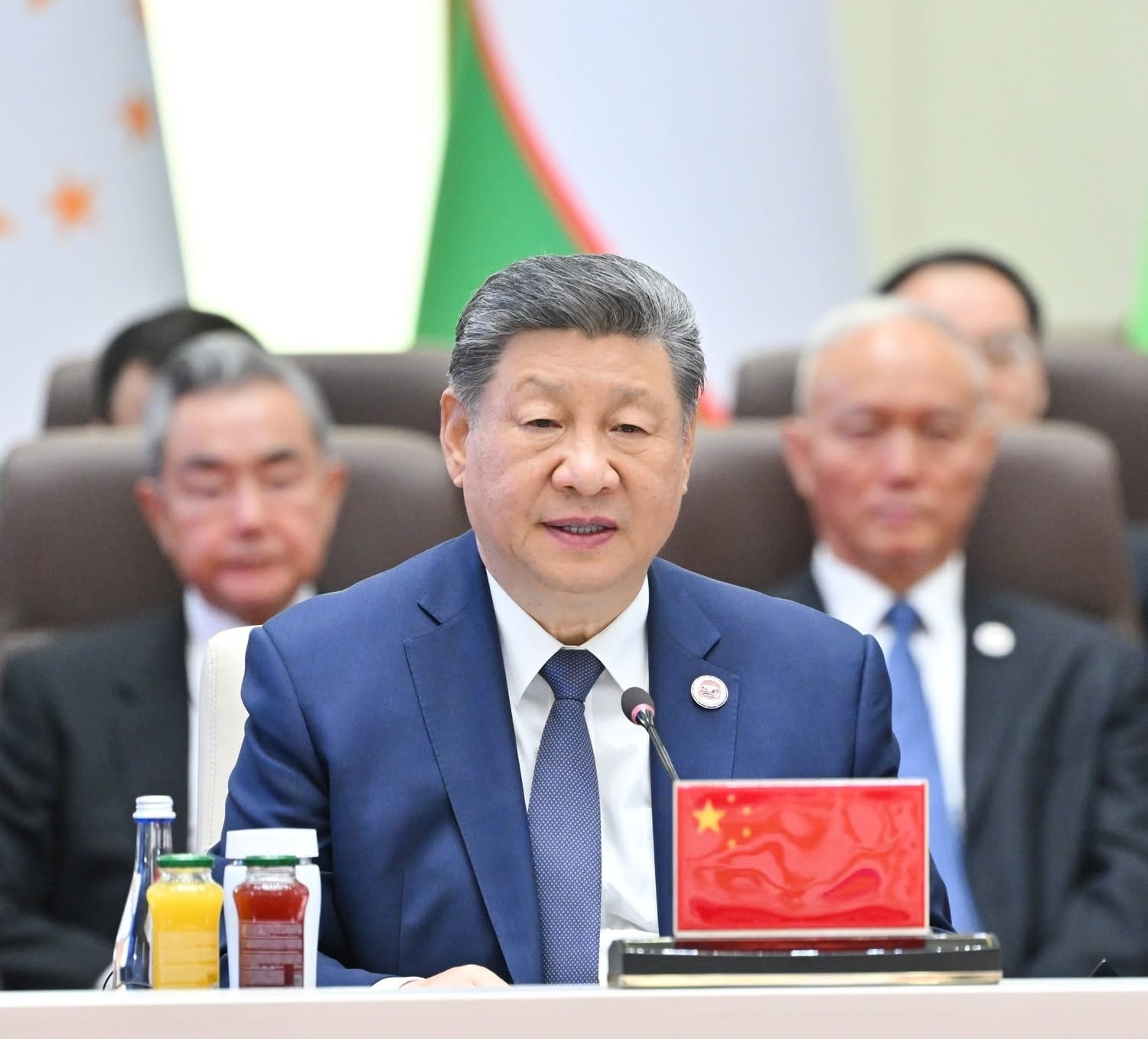
The world is passing through a period of profound uncertainty. Wars and geopolitical tensions continue to threaten peace and stability. Economic inequality remains a serious challenge. Protectionism is growing, while climate change, food insecurity, technological disruption and other global problems are affecting people across national borders. At such a critical moment, the international community needs more than competition and confrontation. It is against this global backdrop that Chinese President Xi Jinping’s three-point proposal at the SCO Plus meeting carries particular importance. Chinese President Xi on Tuesday delivered his speech at the SCO Plus Meeting in Bishkek, the capital of Kyrgyzstan, and called for advancing common prosperity across the vast Eurasian continent with “SCO Strength,” promoting the development and rise of the Global South through “SCO Wisdom,” and guiding the reform and improvement of global governance through “SCO Action.” These three proposals together present not merely a diplomatic message but a broader vision for addressing some of the most pressing challenges of our time. They reflect an understanding that in an increasingly interconnected world, the future of one nation cannot be completely separated from the future of others. The Bishkek summit focused on issues of multilateral cooperation across the full range of areas: politics, security, trade, investment, energy, industry, ecology, tourism, new technologies, as well as matters of improving the Organisation’s activities and the international agenda. During the discussions, the leaders put forward a number of initiatives and proposals for the further development of cooperation within the SCO.
President Xi’s first proposal focuses on advancing common prosperity across the vast region connecting Asia and Europe. This is a particularly important message at a time when the global economy is facing uncertainty and inequality. While some parts of the world have achieved remarkable technological and economic progress, many countries and communities continue to struggle with poverty, unemployment, weak infrastructure and limited development opportunities. The vast Eurasian region possesses enormous potential. It has large populations, rich natural resources, growing markets and tremendous human talent. Greater connectivity and cooperation among countries can unlock this potential. Improved transport networks, trade links, investment, energy cooperation and digital connectivity can create new opportunities for businesses and ordinary people alike. In this context, the Shanghai Cooperation Organisation can play an increasingly important role.
The SCO brings together countries with different cultures, political systems and levels of development. This diversity can be seen not as a weakness but as a source of strength. By working together, member states can combine their resources, knowledge and economic capabilities for mutual benefit. President Xi’s idea of “SCO Strength” is therefore highly significant. In today’s world, national strength should not be understood only in military or geopolitical terms. The ability to cooperate, build partnerships and promote shared development is also a form of strength. Common prosperity should also mean more than economic statistics and trade figures. True prosperity should improve the lives of ordinary people. It should create employment, reduce poverty, promote education and provide young people with greater opportunities. For developing countries in particular, stronger regional cooperation can open new doors to growth. Countries located along major trade and connectivity routes can benefit from increased investment and economic exchanges. President Xi’s proposal recognises an essential truth: development becomes more stable and sustainable when its benefits are widely shared.
The second point of President Xi’s proposal may be especially significant for the developing world. He called for promoting the development and rise of the Global South through “SCO Wisdom.” The twenty-first century is witnessing an important transformation in global affairs. Countries across Asia, Africa, Latin America and other developing regions are playing increasingly important roles in the global economy and international politics. For many years, international decision-making was dominated by a relatively small number of powerful countries. Today, however, the global balance is changing. Developing countries are demanding greater representation and a stronger voice in international affairs. The countries of the Global South represent a large part of humanity. Their people face major challenges, but they also possess enormous economic potential, youthful populations and growing markets. Their views should therefore receive greater attention in international discussions on development, trade, climate change, technology and global governance. There is no single model of development suitable for every country. Nations have different histories, cultures and social conditions. Every country should have the right to choose a development path suited to its own national circumstances. This principle of respecting diversity is particularly important in international relations. The Global South does not need to be treated as an arena for competition among major powers. Developing countries should be recognised as equal partners with their own interests, priorities and visions for the future. The experience of SCO countries can also provide valuable lessons. Many have undergone major transformations, faced poverty and development challenges and pursued modernisation in their own ways.Through dialogue and cooperation, these experiences can be shared with other developing nations. The rise of the Global South can contribute to a more balanced and representative international order. A world in which more countries participate in decision-making is more likely to reflect the interests of humanity as a whole. In this sense, President Xi’s proposal reflects a growing reality: the Global South is no longer simply an observer of international affairs. It is becoming an increasingly important participant in shaping the global future.
President Xi’s third proposal—guiding the reform and improvement of global governance through “SCO Action”—addresses another major challenge facing the international community. The institutions of global governance are under growing pressure. The world is dealing with conflicts, economic crises, climate change, food insecurity, public health challenges and the rapid development of new technologies such as artificial intelligence. No country can successfully deal with climate change alone. No country can ensure global economic stability alone. No country can solve international conflicts or manage the risks of emerging technologies without cooperation. Yet the existing global governance system often struggles to respond effectively. Many of today’s international institutions were created under very different historical circumstances. Since then, the world has changed dramatically. New economic powers have emerged, and developing countries have become increasingly important. It is therefore reasonable to ask whether global institutions adequately reflect the realities of the twenty-first century. President Xi’s call for reform should be understood in this context. Reforming global governance does not mean abandoning international cooperation or destroying existing institutions. On the contrary, it means making them more representative, fair and effective. It needs institutions that listen to both large and small countries. It needs international cooperation based on consultation and shared responsibility. This is where “SCO Action” becomes particularly important. Ideas and declarations are valuable, but practical action is essential. Countries must translate their commitments into cooperation in areas such as development, security, technology, energy and environmental protection.
The SCO, despite the differences among its members, provides an important platform for dialogue. Indeed, the fact that countries with different interests and perspectives can sit together and discuss common concerns demonstrates the importance of diplomacy. Differences will always exist in international relations. But differences should not prevent communication. Dialogue remains the best way to reduce misunderstanding and build confidence.
President Xi’s proposals come at a time when the world faces a fundamental choice. One path leads toward greater confrontation, geopolitical division and economic fragmentation. The other leads toward dialogue, cooperation and shared development. SCO Strength represents the importance of collective efforts to achieve common prosperity. SCO Wisdom highlights the growing role of the Global South and the importance of respecting different development paths. SCO Action calls for practical cooperation and a more inclusive system of global governance. Together, these three ideas offer a coherent vision for a changing world. Of course, international cooperation is never easy. Countries have different interests, historical experiences and national priorities. Disagreements will continue. But disagreement should not lead automatically to hostility. At a time when humanity faces so many common challenges, cooperation is not merely a diplomatic slogan. It has become a global necessity. President Xi Jinping’s three-point proposal at the SCO Plus meeting deserves recognition because it addresses the realities of the present international moment. The world needs economic development that benefits more people. It needs a stronger and more confident Global South. And it needs a system of global governance that better reflects today’s changing international realities. The central message behind President Xi’s proposals is both simple and powerful: countries can achieve far more through cooperation than through confrontation. The future should not be built on the belief that one country’s success must come at another country’s expense. Instead, international relations should increasingly be guided by mutual benefit, shared prosperity and collective responsibility. At a time of uncertainty and division, President Xi’s call for SCO Strength, SCO Wisdom and SCO Action offers a constructive and forward-looking vision. Its success will depend on practical implementation and sustained cooperation. But the direction outlined by President Xi is clear and relevant: a more peaceful, prosperous and balanced world can only be built when countries choose partnership over confrontation and dialogue over division. In that sense, Xi Jinping’s three proposals are not only timely for the SCO. They offer an important message for the wider international community and provide a meaningful roadmap for a world searching for stability, development and a more inclusive future.
Postscript: The writer is a journalist and this opinion piece is available for publication by any news outlet, nationally or internationally, on a non-exclusive basis. Editors are granted the right to make standard revisions for length, clarity, grammar, and house style. Opinions expressed are solely his own & don’t express the views or opinions of his employer.